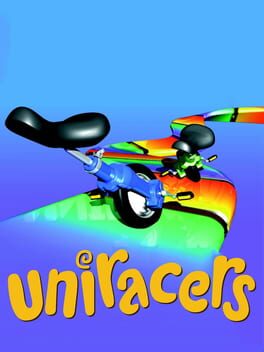
1994 · DMA Design · racing · Nintendo
27 sources · 38 facts · verified 3mo ago · how this was made
Why this one is in the canon, and how to start it well.
Every named code, glitch, and easter egg above traces back to one of these sources. SharkVault editorial AI is grounded in human-curated facts files; nothing on this page is invented.
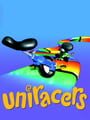
What made Uniracers matter to cheat-code culture was its competitive purity. Unlike Mario Kart or F-Zero, there were no items, no weapons, no shortcuts that broke the game—just you, the track, and the question of whether you could land a 720° spin off a ramp without eating pavement. Game Genie codes for invincibility or turbo starts existed, but the real draw was mastering the trick chain: every successful stunt fed the speed meter, so the best players looked less like racers and more like Tony Hawk on one wheel cite. The game sold well enough to earn a PAL release as Unirally in April 1995, but its legacy was cut short by a lawsuit from Pixar, who claimed the unicycle designs infringed on a character from their 1987 short Red’s Dream—Nintendo pulled production, and DMA never made a sequel cite. For a generation of SNES owners, Uniracers was the proof that weird ideas, executed with confidence and a rock-solid frame rate, could compete with Nintendo’s own first-party lineup. It’s the game that made you believe a riderless unicycle could be cooler than a go-kart.
Pick Circuit mode first — skip League for now. Circuit gives you short, three-race chunks that teach track layouts and trick timing without the commitment of a full tournament bracket.
Learn the backflip immediately — hold Y (or B, depending on your button config) while airborne. Land it clean and you get a speed boost. Botch the landing and you eat pavement. This is 80% of early-race strategy.
Pump the track — tap jump (A) rhythmically on hills and ramps to maintain momentum. Uniracers punishes coasting; active input equals faster lap times even without tricks.
Ignore complex combos until you can consistently land single tricks — a clean backflip is worth more than a failed 360-backflip-roll attempt that costs you three seconds of tumbling. Speed first, style second.
Watch the opponent’s speed bar — top of the screen shows both racers’ current velocity. If they’re pulling ahead after a trick sequence, they landed something you didn’t. Replay and study.
Unlock new tracks by winning — Circuit mode gates later courses behind victories. You need five wins to open the full roster. Racing unlocks content faster than grinding Stunt mode early.
Memorize which ramps launch high vs. far — steep ramps give more airtime for tricks. Shallow ramps give distance but tight landing windows. The track preview before each race shows the geometry; use it.
Chain tricks on downhill slopes. The speed multiplier stacks faster when you’re already accelerating — save backflips and spins for descents rather than flat ground and carry the bonus velocity into the next section.
Anti-spin (L+R simultaneously) cancels bad landings. About to land a trick at a terrible angle? Tap both shoulder buttons to force a flat landing. You lose the trick points but avoid the face-plant and three-second recovery.
Memorize which obstacles are ramps vs. walls. The 2D perspective makes it hard to tell at speed — certain angled surfaces launch you (good for tricks), others are solid barriers (race-enders). Circuit mode forces you to learn this; one mental note per track beats ten failed runs.
In stunt mode, variety matters more than difficulty. The scoring system penalizes repetition — five different basic tricks outscore three perfect backflips. Rotate through your move list instead of grinding the same high-value trick.
Lean forward (Y button) on straightaways between trick sections. The tuck animation is subtle but measurably faster than neutral posture. Doesn’t help during jumps, but on long flat sections it’s free time savings.
The “Lava Reef” track type has invisible speed zones. Certain sections of red-glowing track grant a temporary boost if you’re already above a speed threshold — rewarding players who entered the zone with momentum from a landed trick.
Your unicycle’s color/pattern unlock is cosmetic, but higher leagues require specific time/score gates. Bronze-tier strategies won’t cut it in Gold League — the opponent AI rubberbands, and stunt-score requirements double. Practice mode exists for a reason.
The walls players actually hit, and the way through each.
Circuit 5 “Lava Luge” — Landing the Final Jump Chain
The final three jumps in Lava Luge demand precise trick timing or you land flat and bleed all momentum. Backflips or spins mid-air wreck the landing angle if you hold them too long. The fix: tap tricks immediately after leaving each ramp—one clean backflip per jump, no double-tapping. Land each trick before the apex of the arc. Still losing speed? Skip tricks entirely on the first two jumps and save your flip for the final ramp where the landing zone is wider.
Stunt Mode Point Thresholds — “Not Enough Points” Walls
Stunt tracks like “Loop-de-Loop” and “Half-Pipe Heaven” gate progression behind point totals that feel arbitrary until you understand the combo system. Single tricks don’t cut it. The game rewards continuous trick chains without touching flat ground. On Half-Pipe Heaven specifically, alternate between backflips and front flips on each wall transition—don’t repeat the same trick twice in a row or the point multiplier resets. A clean 8-trick alternating chain typically clears the 25,000-point threshold that blocks most players.
Anti-Uniracers — The Rubber-Band AI Catch-Up
Your AI opponent in later circuits snaps back to your position no matter how clean your run, especially on “Roller Coaster” and “Sky Ramp.” This isn’t a skill issue—it’s DMA Design’s aggressive rubber-banding. The counter: build a massive speed boost in the final third of the track by landing one high-value trick (360° + flip combo) right before the last straightaway. The AI can’t match a sudden 20% speed spike that late. Don’t waste tricks early; the computer erases your lead.
Unlocking Gold League — The 15-Medal Confusion
The game never explicitly states you need 15 total medals (any combination of Bronze/Silver/Gold) to unlock Gold League tournaments. Players assume they need Gold on every Bronze League track, burn out grinding perfection, and quit. You don’t. Grab Silver medals on easier tracks, skip the frustrating ones, and move up the moment you hit 15. The medal counter is in the tournament select screen—check it.
15 of 19 verified codes, free to read. The rest are in the Code Vault.
EED8-23AFDFD8-2EDFEE6A-C7A8CFB9-3DDCC2AE-C469DD2D-4D08EEC4-3F693CA4-3F697E1B8D002542-D7067E0EF101AAB4-370ED42D-4D08002D-4D087E0E1700EE2D-4D08GameShark Labs · SharkVault Founding Membership
Unlock the full guide
9 more sections + all 19 codes in the Code Vault : boss strategies, glitches, easter eggs, and the complete archive. Founding Members get every GTA drop through launch day.
Only 64 days until GTA VI. lock in $1.99/mo for life before the founding rate closes (then $2.99/mo).
Uniracers! It was weird how fun this game was. Never heard anyone outside my two brothers talk about it. #blutoid
@chronolynxx.bsky.social
The best way to explain late period Sega Genesis and Sega of America is: imagine if Nintendo of America decided to not bother releasing Kirby Super Star, Yoshi's Island, and Super Mario RPG on the SNES because they're too Japanese so they made a studio to make more games like Tin
MercuryCDX (@mercurycdx.bsky.social)
Surfaced from external sources, newest first. Not editorially endorsed.