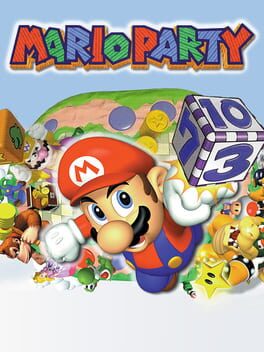
1998 · Hudson Soft · party · Nintendo
Why this one is in the canon, and how to start it well.
The GameShark scene for Mario Party was surprisingly robust given the game’s casual reputation. Codes for infinite coins, forced star spawns, and minigame invincibility circulated heavily in 1999—not because players wanted to beat the game, but because they wanted to orchestrate chaos. The always-win-minigames code became a staple of after-school sessions where one player would secretly enable it and watch the room implode. Nintendo Power printed a handful of board-unlock codes, but the real underground was GameFAQs and early cheat-code forums where players shared memory addresses for manipulating turn order and Bowser-space outcomes. The game’s random-number generator was primitive enough that dedicated players could reverse-engineer star-spawn patterns, turning the party into a cold optimization exercise—exactly the kind of thing the cheat community lived for.
Pick a character and roll. Board movement is pure dice — no skill, just luck. Blue spaces pay 3 coins, red spaces cost 3. The minigames are where you actually play.
Win minigames to bank coins. Ten coins per win. You need 20 to buy a star, so two wins puts you in range. Button-mashers, timing challenges, memory tests — the rotation is random, so learn the controls as they come.
Buy stars the instant you land on the star space. Stars win the game, not coins. The star space relocates after every purchase — camping a spot does nothing. Land on it broke and you’ve burned the turn.
Use items when they matter, not when you get them. Mushrooms grant extra die rolls — critical for closing distance to the star. Warp Blocks swap positions with another player — save it for when someone’s one space away from the star.
Target the leader in 1v3 minigames. When you’re solo against three, you’re usually in first. These minigames tilt toward the group — expect to lose more than you win.
Ignore the coin count until the final five turns. Bonus stars at game end — “most minigame wins,” “most spaces traveled” — can vault last place to first. Two bonus stars and one lucky star purchase in the closing rounds flips the board.
Land on Happening Spaces when you’re behind. They trigger board-specific events that often redistribute stars or coins—DK’s Jungle Adventure can swap star counts between players. Ahead? Avoid them. Trailing? Press the chaos button.
Save coins for the last five turns. Boo appears on most boards and costs 50 coins to steal a star (or 5 to steal coins). Sitting on 60+ coins mid-game makes you a target. Spend down to 20–30, then hoard again in the final stretch when Boo matters most.
Memorize the minigame rotation. The game cycles through four-player, 1-vs-3, and 2-vs-2 games in a predictable pattern based on board-space colors. If you know a 1-vs-3 is coming and you’re solo, land on a red space to guarantee the “1” role—those games often favor the lone player for coin payouts.
Mushrooms and Stars don’t roll the full value. A Mushroom block shows 1–10, but the distribution is weighted—7, 8, and 9 appear far more often than 10. Don’t bank on a max roll to reach the star; plan routes assuming 7–8 movement.
Bowser Spaces are coin-positive in the long run. Bowser can steal coins or stars, but his roulette heavily favors “Bowser’s Minigame” (where everyone loses coins to him) or doing nothing. Broke? Landing on Bowser is often safer than landing on a Chance Time space.
Chance Time is the nuclear option. It can swap stars, coins, or both between any two players. Last place on the final turn? Hunt for the Chance Time space—it’s the only mechanic that can flip a 3-star deficit instantly.
Button-mash minigames favor the N64’s joystick rotation trick. For games like Paddle Battle or Tug o’ War, rotating the stick with your palm is faster than thumb movement, but it will blister your hand and potentially damage the controller. Use at your own risk; Nintendo later warned against this technique.
The walls players actually hit, and the way through each.
Tug o’ War controller rotation lockout — Rotate Control Stick, Pedal Power, and similar rotation minigames destroy the N64 stick mechanism if you palm-spin. The gear teeth strip or the bowl cracks. Players who grew up with later consoles palm-rotate by instinct; the stick wasn’t built for it. Use your thumb in short, controlled circular motions instead. If the stick already feels loose or unresponsive, you’re fighting hardware damage, not execution. Hudson Soft never patched this; it became an infamous liability claim in 2000 when Nintendo offered replacement gloves after blister complaints.
Chance Time randomness feels rigged — The roulette that swaps stars/coins between players uses a pseudo-random seed tied to frame timing, but the stop window is so narrow (sub-10 frames) that human reaction can’t reliably influence it. Players convinced they’re “bad at stopping it” are experiencing confirmation bias. The game picks the outcome before the animation finishes. Your only agency: avoid landing on the Chance Space by counting ahead and burning Mushroom items to overshoot, or using Warp Blocks to reposition. Speedrun communities treat Chance Time as a reset condition in single-player optimization because the variance is uncontrollable.
Bowser spaces in final-five turns — When the last-five-turns event triggers, red spaces become Bowser spaces on most boards. First-time players don’t internalize this rule change and walk into a 50-coin Bowser tax or star theft with no warning. The game announces it once during the event cutscene, then never reminds you. After the Koopa Kid announcement, treat every red space as lethal. Prioritize Skeleton Keys to unlock shortcut gates that bypass red-heavy routes, or hoard Mushrooms to skip over danger zones entirely. DK’s Jungle Adventure and Yoshi’s Tropical Island have the most punishing red-space clusters in the final stretch.
1-vs-3 minigame skill disparity — Games like Bowser’s Big Blast and Pipe Maze heavily favor the solo player if the team of three doesn’t coordinate. The solo side has simpler execution; the team requires verbal callouts or shared pattern recognition that randos in VS mode never establish. If you’re stuck losing as the team: assign roles before the countdown (one person tracks, two execute), or focus on the solo slot in rotation to guarantee coin income.
All 9 verified codes for Mario Party, free to read.
800FFAA9 0000800FFB39 0000800FFAD9 0000800FFB09 0000800FFB3D 0000800FFAAD 0000800FFB0D 0000800FFADD 00008111193A 0000GameShark Labs · SharkVault Founding Membership
Unlock the full guide
9 more sections : boss strategies, glitches, easter eggs, and the complete archive. Founding Members get every GTA drop through launch day.
Only 64 days until GTA VI. lock in $1.99/mo for life before the founding rate closes (then $2.99/mo).
Normally, Mario Party games give all characters the same hitbox for fairness. However, Bowser Toss in Mario Party 3 gives an advantage to taller characters even with identical inputs. Since no minigames favor shorter characters, Waluigi is the objectively superior character in Ma
Supper Mario Broth (@mariobrothblog.bsky.social)
Surfaced from external sources, newest first. Not editorially endorsed.· 17 more in this feed.